

As parents, keeping your child safe is your top priority. Each time you put your child in a car, you’re relying on that seat to keep them safe from the sudden dangers of the road. Unfortunately, car accidents are a leading cause of injury for children in the United States. To combat this risk injury, strict regulations have been put in place. Understanding the car seat law Texas enforces is not just about avoiding traffic tickets—it is about saving lives.
At Jones & Koch Law Firm, we have seen firsthand the devastating aftermath of collisions. Our dedicated injury lawyers serve families across Houston, Cypress, TX, and Corpus Christi, helping victims navigate the complex aftermath of an accident. No matter what type of accident you are having, or whether it is a minor collision or a tragic truck accident, it is important to know exactly what the laws are that state officials are enforcing when it comes to child passenger safety. This comprehensive guide will explain the Texas transportation code, clarify the seat requirements Texas mandates, and help you ensure your child is riding safely.
Understanding the Texas Transportation Code for Child Safety
Section 545.412 of the Texas Transportation Code serves as the basis for child passenger safety in the state. The Texas law is quite explicit on when and how children are to be restrained.
The primary rule states that a person commits an offense if they operate a passenger vehicle and transport a child who is younger than 8 years old, unless the child is taller—feet inches specifically measuring 4 feet 9 inches—without keeping them secured in a child passenger safety seat system. This child safety seat must be installed and used according to the instructions of the car seat manufacturer.
Texas officials will apply these laws only to the guidelines established by the National Highway Traffic Safety Administration (NHTSA). A safety seat must be crash-tested to meet the federal standards. Seat laws Texas enforces can be followed with fines up to $250, however, most importantly performing these requirements will place your child in serious danger during the event of an auto and pedestrian accident.
Stages of Child Passenger Safety: From Infants to Older Children
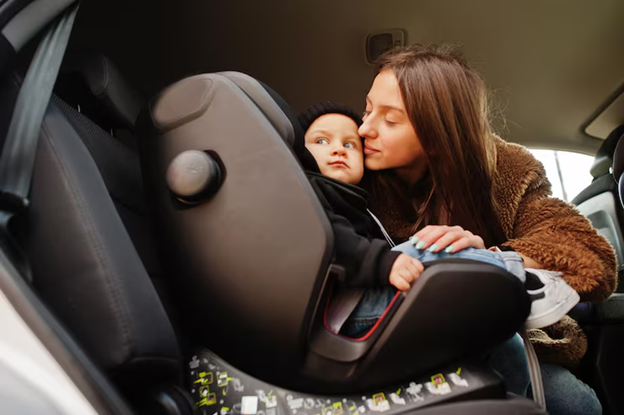
The Texas Department of Public Safety and safety professionals suggest a phased program of child passenger protection. The change from a rear seat to a regular vehicle seat belt is very dependent on the height and weight limits set by the seat manufacturer.
Infants, Toddlers, and the Rear-Facing Stage
During their younger years, all infants and toddlers must ride rear-facing. A rear-facing car seat provides the best possible protection for a baby’s fragile head, neck, and spine. Texas car seat guidelines advise that you should keep your child in a rear-facing position until they reach the highest weight and height allowed by the car seat’s specifications.
There are many parents who want to rotate the seat around, but it’s not advisable to rush. You are not allowed to use a rear-facing seat until your child has outgrown the rear-facing weight and height limits. Once a child has reached the rear-facing weight height limit, or outgrown rear-facing limits in general, they are ready for the next stage. Avoid switching to a forward-facing seat until they have definitely outgrown the rear-facing weight limit or the forward-facing label weight height limit.
Texas Car Seat Laws Forward-Facing
When a child has finally outgrown rear facing weight allowances, they transition to a forward facing car seat. The Texas car seat laws forward-facing guidelines require the use of a five-point seat harness. A forward-facing car provides vital restraint across the strongest parts of a child’s body.
Your child must sit in this front-facing seat until the maximum weight or height for that model is reached. Only when they have outgrown the forward-facing weight height limits should you consider the next step.
Car Seat to Booster Seat Requirements
The transition from a harnessed seat to a belt positioning booster is a major milestone. The car seat to booster seat requirements dictate that a child must use a booster seat until the vehicle’s standard safety belt fits properly.
Texas booster seat requirements are designed to lift the seat child so that the vehicle seat belt sits correctly across their body. The shoulder belt should be snugly across the chest and shoulder not the neck and lap belt should be snugly over the upper thighs not the stomach. To ensure the seat belt fits, you must observe the height and weight requirement for booster seat products. Most children will need to use booster seats until they are at least 8 years age or reach the magic number of 4 feet 9 inches tall.
Are There Any New Car Seat Law Updates in Texas?
Parents frequently ask our legal professionals: are there any new car seat law updates in Texas? Keeping up with the new car seat law Texas introduces is vital for your family’s safety.
Looking at Texas car seat laws 2025 and beyond, the state’s fundamental age and height baseline (under 8 years old, unless 4’9″) remains consistent. The National Highway Traffic Safety standards, however, have changed. Specifically, the highway traffic safety administration (under the umbrella of the larger National Highway) has new federal regulations coming into effect in the end of 2026 with a new procedure for side-impact testing. While this is a federal highway traffic manufacturing standard rather than a change to the Texas transportation code itself, it means the seats you buy will be subjected to more rigorous crash testing by the National Highway Traffic Safety Administration.
What to Do After a Car Accident Involving a Child Passenger
Even when you follow every car seat requirement perfectly, the negligence of others can cause devastating car accidents. When your vehicle becomes the victim of a distracted driver, commercial truck or a serious pedestrian collision, the physical and emotional damage is overwhelming.
At Jones & Koch Law Firm, our team of accident lawyers has lots of experience defending households impacted by the recklessness of other individuals. We handle a variety of matters ranging from personal injury and wrongful death to workers comp and as a small business owner in commercial litigation.
Do not discuss your child’s injury with insurance companies without an attorney present. Insurers will often argue that they’re trying to keep the costs low, seeking to avoid paying out or to shift the blame back to the parents, suggesting, for example, that the seat belt is not properly adjusted, or that the belt is not properly placed over the head of the child. A competent personal injury lawyer will go through the evidence, look into medical opinions and work hard to secure the compensation you deserve to include costs of ER visits, specialist care, and lasting recovery.
Frequently Asked Questions (FAQs)
Does a 7-year-old need a car seat in Texas?
Yes. By law, children 7 years of age must ride in a federally approved child passenger safety seat system (such as a booster seat), until they meet the height standard for car seat exemption (4 feet 9 inches).
Children under what age should always be restrained in a child safety seat while inside a vehicle?
In Texas, children under 8 years of age must always be restrained in a child safety seat unless they are taller than 4 feet 9 inches.
What is the height requirement for car seat exemption?
The critical height limit in Texas is 4 feet 9 inches. Once a child is this tall, the standard adult seat belts usually fit properly, allowing them to transition out of a seat booster, regardless of whether they have reached their 8th birthday.
What are the Texas booster seat requirements?
A child who has outgrown their forward-facing harness must use a booster seat. The booster must be used according to the seat manufacturer instructions to ensure the vehicle’s lap and shoulder belt fits perfectly across the child’s lap and chest.
What is the height and weight requirement for booster seat transition?
While the law focuses on age and the 4’9″ mark, you should only move your child to a booster when they have exceeded the highest weight height limit of their forward-facing five-point harness seat (often around 40 to 65 pounds, depending on the manufacturer).
How do I know when my child has outgrown rear facing weight height limits?
You must check the labels on your specific car seat. Every seat has a clearly marked facing weight height limit. Children should ride rear facing as long as possible, only turning forward when they exceed the specific outgrown rear facing weight or outgrown rear height limits printed on the side of the seat.
What is the new car seat law Texas is implementing?
While the base Texas Transportation Code 545.412 has not drastically changed, parents asking about Texas car seat laws 2025 should be aware of the upcoming National Highway Traffic Safety Administration regulations taking effect in 2026, which mandate stricter side-impact testing for all child car seat manufacturers in the United States.
If I am in an accident, will the insurance company replace my car seats?
Yes, the NHTSA recommends replacing any child car seat that was occupied during a moderate to severe crash. Our injury lawyers will fight to ensure the at-fault driver’s insurance company covers the cost of replacing your safety seats as part of your property damage claim.
Protect Your Family’s Legal Rights Today
When a negligent driver puts your child in harm’s way, you deserve aggressive, compassionate legal representation. You shouldn’t have to shoulder the burden of medical bills, trauma, and property damage alone. Ensure your family’s future is protected by partnering with legal professionals who understand the intricate details of Texas traffic safety and personal injury law.
We offer a free consultation to review the details of your case. Let us handle the aggressive insurance companies while you focus on helping your family heal.