
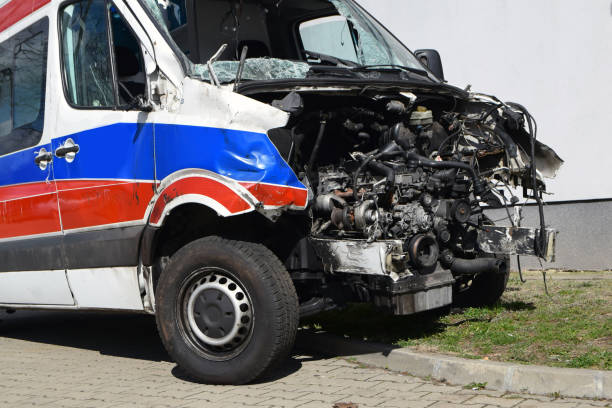
If you drive anywhere in Texas, you share the road with an ever-growing army of commercial delivery vehicles. From the distinct brown step-vans of UPS and the branded purple-and-orange FedEx trucks to the dark blue Mercedes Sprinter vans hauling Amazon Prime packages, these vehicles are a permanent fixture in our neighborhoods, highways, and commercial centers.
While the convenience of two-day and same-day delivery has transformed how we shop, it has also introduced a severe hazard to our roadways. A full-out collision between a standard sedan and a fully loaded corporate delivery van is no walk in the park. Because of the sheer size disparity, the aggressive delivery quotas placed on drivers, and the complex web of corporate liability, these collisions are fundamentally different from standard two-car accidents.
After a commercial fleet crash, there’s more to it than just exchanging insurance information. Both corporate giants and third-party logistics (3PL) providers adopt aggressive defensive strategies in order to minimize the liabilities they face as soon as a crash. Securing your rights demands a specialized legal strategy, which is why partnering with an experienced delivery van accident attorney, Texas victims trust is essential to leveling the playing field.
1. The “Final Mile” Pressure: Why Delivery Fleet Accidents Happen
It’s actually when you consider the business model of today’s ecommerce that you can get the why of corporate delivery collisions. The term “final mile” is used by the logistics industry to describe the last mile in a package’s delivery journey from the local distribution warehouse to the customer’s front doorstep. This is the most costly and time-consuming segment of shipping, and businesses put a lot of pressure on drivers to be efficient.
Instead of driving semi-trucks for hours on miles of open interstates, delivery van drivers drive on residential streets, in close-knit apartment buildings, and crowded intersections, where they are constantly starting and stopping. The contributing factors to a delivery fleet crash are most commonly:
- Unrealistic Quotas and Rushing: Drivers are often expected to deliver anywhere from 150 to over 300 packages in a single shift. The fast tempo can lead to speeding, the running of red lights and rash, unsignalled turning.
- Severe Driver Distraction: Delivery drivers don’t just look at the road; they are heavily dependent on the proprietary routing tablets and GPS devices. A driver’s eyes are removed from the scene in vital seconds to look down at a screen to verify the next drop-off location or scan a package.
- Driver Fatigue: Long shifts, physical exhaustion from hauling heavy boxes, and mandatory overtime during peak holiday seasons routinely lead to delayed reaction times and drowsy driving.
- Improper Vehicle Loading: When a step-van or high-roof cargo van is loaded unevenly or too heavily, it will become unstable, its braking distance will increase, and the likelihood of a rollover accident will be greatly increased.
2. The Liability Labyrinth: Corporate Employees vs. Independent DSPs
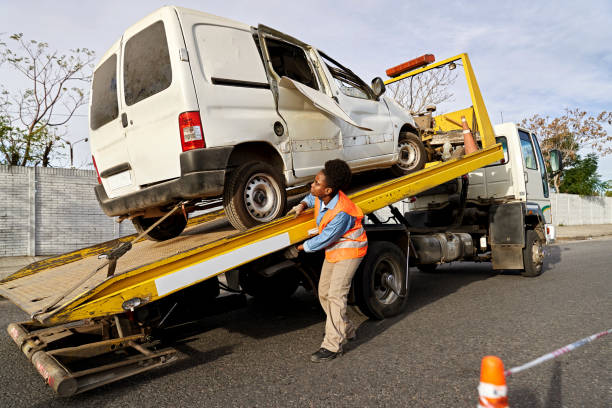
If you are hit by a neighbor driving a personal sedan, liability is straightforward: you file a claim against their personal auto policy. In the event that you’re struck by a corporate delivery vehicle, determining who’s legally and financially liable can become a legal labyrinth.
FedEx and UPS: Direct Employment vs. Contractors
UPS and other businesses have traditionally had direct employees as their workforce. If a UPS driver is at fault in a car accident while performing his duties, the law otherwise known as respondeat superior (vicarious liability) holds the parent company directly responsible for the negligent actions of the worker. FedEx, however, has a different business model, with some divisions, such as FedEx Express, relying on direct employees, and other divisions, such as FedEx Ground, heavily on independent contractors.
The Amazon DSP Shield
Amazon has taken the contractor model to an extreme level through its Delivery Service Partner (DSP) program. Most of the dark blue Prime vans you see are not actually owned by Amazon, nor are the drivers Amazon employees. Instead, they’re employed by hundreds of smaller regional third-party logistics (3PL) companies that lease the vans and only work for Amazon.
When an Amazon delivery van is involved in a severe crash, Amazon’s corporate defense attorneys immediately attempt to shield the trillion-dollar parent company from liability. They will claim the driver only worked for the local DSP and try to restrict your monetary damages to the lesser insurance coverage. Defeating this corporate shield requires an attorney who knows how to prove the deep operational control Amazon exerts over these drivers—from setting their routes and monitoring their driving speeds to mandating their daily schedules.
3. Commercial Insurance Limits Bring Aggressive Defense Tactics
Federal and state laws mandate commercial insurance policies be carried by commercial delivery vehicles, which run continuously and carry heavy loads. These policies have very high liability limits, typically $1 million, $5 million or even more than $5 million, compared to the typical personal auto policy limit of $100,000 per claim.
With higher limits, there’s enough money available to fund catastrophic injuries, medical expenses and long-term rehabilitation, but there’s also millions of dollars that are on the line with the insurance company. They will not just send a cheque. Rather, corporate commercial insurance carriers give their most hawkish, top-tier adjusters these claims. They will review your medical history, try to fault you for the accident, or get you to agree to a lower than market value settlement before you have even been diagnosed with all of your injuries.
4. Corporate “Rapid Response” Teams and Electronic Evidence
When it comes to the difference between a regular car accident and a corporate delivery fleet collision, it may be the few hours immediately after the crash that are most significant.
Some companies have their major logistics companies that have what is referred to as “rapid response” teams or “go-teams. The company will send defense investigators, accident reconstructionists, and attorneys right to the scene of the severe collision just minutes after a driver calls for help. They don’t go looking for the truth; they go looking for evidence, witnesses and they build a story that reduces the company costs prior to towing away the damaged vehicles.
The Importance of Preserving Telematics Data
Most of the delivery vans are nothing but rolling computers with advanced telematics systems, black boxes and multi-angle dashcams. This system of electronic data recording collects important real-time information such as:
- The exact speed of the van at the time of impact.
- Whether the driver applied the brakes or attempted to steer away.
- GPS tracking showing how many hours the driver had been operating without a break.
- In-cab video footage revealing whether the driver was texting, looking at a routing tablet, or falling asleep.
Corporate fleets have habits of having video footage overwritten and electronic logs purged unless this evidence is formally requested and promptly obtained via a legally binding spoliation letter.
5. What to Do After a Collision With a Delivery Fleet
If you or a loved one is involved in a crash with an Amazon, FedEx, or UPS vehicle in Texas, taking the right steps can protect both your physical recovery and your legal claim:
- Call 911 immediately: Always ensure a formal police report is filed by the responding law enforcement agency.
- Seek Immediate Medical Attention: Go to the emergency room or an urgent care clinic immediately, even if you feel your injuries are minor. Adrenaline masks severe trauma like internal bleeding, whiplash, and traumatic brain injuries.
- Document Commercial Identifiers: If you are physically able, take photos of the van’s license plate, the company logos, and any specific serial numbers or USDOT (Department of Transportation) numbers printed on the side of the vehicle.
- Refuse Recorded Statements: An adjuster from the commercial insurance company will likely call you within days or even hours of the crash. Do not give them a recorded statement, and do not sign any initial settlement releases.
Frequently Asked Questions (FAQs)
Can I sue Amazon directly if I was hit by an Amazon Prime delivery van?
This will depend on the specific details of the accident. Amazon has outsourced its delivery work to third-party Delivery Service Partners (DSPs) to the extent possible, but a savvy personal injury lawyer can explore the operational control, tracking logs, and routing requests and secure a victory from the parent company if appropriate.
How long do I have to file a lawsuit after a delivery van accident in Texas?
The personal injury statute of limitations in Texas is typically two years from the accident. But, vital electronic data, telematics logs and dashcam footage can be wiped by the delivery company within weeks, so it’s important to get legal help as early as possible to prevent the loss of critical data.
What if the delivery driver was driving their own personal vehicle?
With the rise of gig-economy services like Amazon Flex, some drivers use their personal cars to deliver packages. In these cases, liability may fall on a combination of the driver’s personal auto insurance and the corporate supplemental policy active during the delivery window.
Why should I hire an attorney instead of dealing with the commercial insurer myself?
Commercial insurers handle thousands of fleet accidents and are experts at devaluing claims. An experienced attorney understands how to extract black box data, navigate multi-tiered corporate insurance policies, and fight for the maximum compensation you deserve for medical bills, lost wages, and pain and suffering.
Schedule Your Free Case Evaluation Today
You don’t need to take on this complicated legal battle with corporate legal teams and aggressive commercial adjusters alone, and you don’t need to be a physical trauma victim in the process. At Jones & Koch Law Firm, we take all personal injury cases on a contingency fee basis. It means that you don’t pay any money initially, and we only charge a fee when we win your claim.
Begin your journey for recovery and to hold negligent corporations accountable. We would be delighted to meet with you and discuss your case for free. We will listen to your story, discuss the accident and offer you clear and actionable legal guidance.