
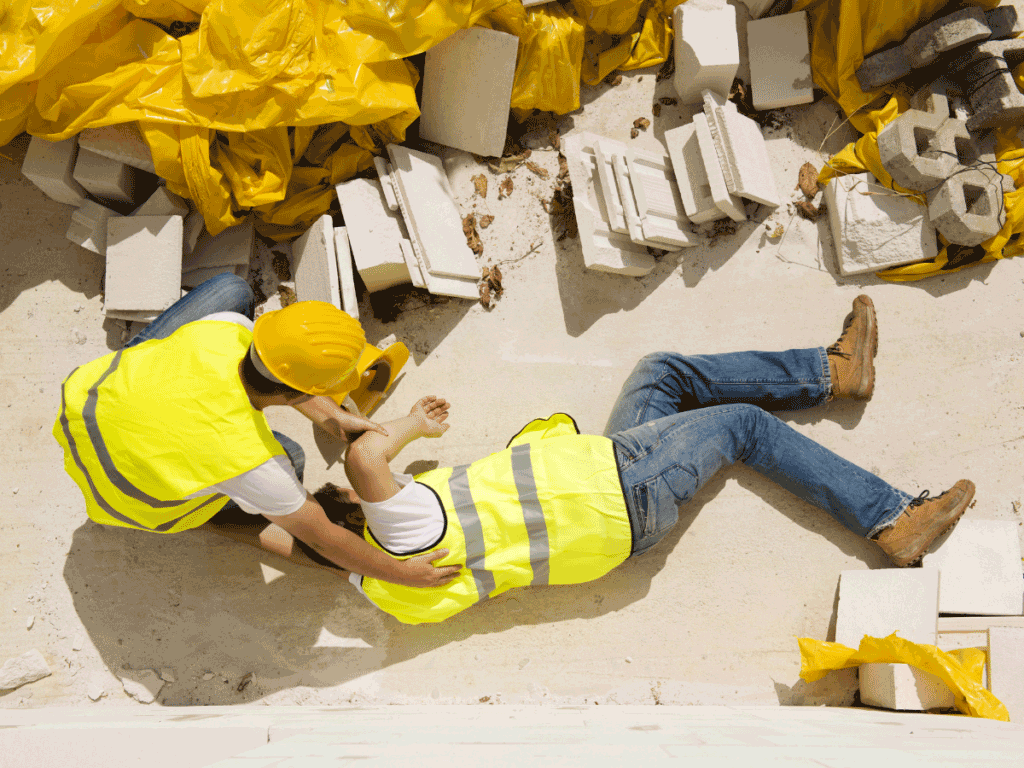
Corpus Christi is experiencing a remarkable era of growth, with commercial developments, high-rise office buildings, and expansive retail centers reshaping the city’s skyline. This economic boom comes with monumental opportunities for the Coastal Bend region, but also presents the harsh realities of commercial construction and the risks that come with it for the people building our City.
The workplace at a commercial construction site is an inherently dangerous place. One of the worst hazards for workers is falling from heights, including when on scaffolding or ladders. Working on multiple levels above ground level can change your life in an instant with one oversight.
Falls remain the leading cause of fatalities and catastrophic injuries in the construction industry nationwide. Commercial development is a fast-moving process, and in some cases, safety measures have been neglected to meet a deadline. Failure to build a scaffolding that’s stable or failing to provide adequate fall protection is devastating.
Navigating the aftermath of a severe fall requires more than just medical care; it requires aggressive legal strategy. Commercial construction sites involve complex webs of liability, spanning property owners, general contractors, and various subcontractors. The key to navigating this complexity is finding the right Corpus Christi workplace injury lawyer to uncover who’s at fault and to obtain the money you deserve to get your life back.
The Reality of Scaffolding and Ladder Accidents in Commercial Construction
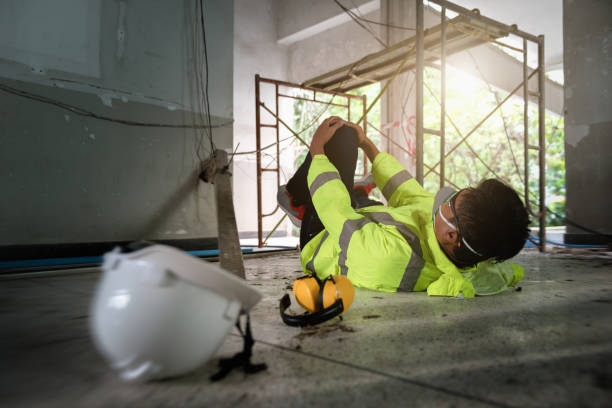
Painters, electricians, framers, and steelworkers working on commercial projects are in the habit of working at great heights every day. But the tools that are supposed to keep these workers safe, like scaffolding and commercial ladders, frequently become the cause of injury when not properly managed.
The construction of scaffolding should be carefully carried out by competent individuals, monitored and inspected regularly. Unfortunately, on busy commercial sites, there are instances when scaffolding is changed by people who are not authorized, is loaded with heavy loads, or is left unsecured on the site to the notorious Coastal winds of Corpus Christi.
Ladders also pose a danger. Suddenly, a shift can send a worker plunging to the ground, whether it is an unmaintained A-frame ladder on a smooth concrete floor or an unsecured extension ladder that didn’t have the proper ties and knots.
At Jones & Koch, we understand the specific nuances of commercial construction accidents. We know that these falls aren’t “freak accidents”! They are, in nearly every case, a result of negligence, OSHA violations, or failure to keep the premises safe. It is our goal to hold the responsible corporations accountable and seek the highest possible amount for our clients.
Understanding General Contractor Liability in Texas
One of the most complex aspects of a commercial construction fall is determining who is actually at fault. A commercial building job site is a shared workplace with dozens of companies working simultaneously, as compared to a regular office environment.
The general contractor (GC) is the overall project manager in charge of the site. Their job is to organise the schedule, run the budget, and importantly keep the whole site safe.
Because of their role, general contractors bear a significant burden of responsibility:
- Site Control: The GC has ultimate control over the premises. If a hazard exists—such as an improperly assembled scaffold—the GC has a duty to identify it and halt work until it is fixed.
- Safety Protocols: General contractors must establish and enforce comprehensive safety programs. If they fail to mandate the use of personal fall arrest systems (PFAS) for workers at heights, they can be held liable.
- Subcontractor Oversight: While subcontractors have their own safety duties, the GC must ensure that the subcontractors they hire are competent and adhering to OSHA standards.
If you are a subcontractor (such as a specialized roofing contractor or an electrical contractor) and you are injured due to a failure on the part of the general contractor, you may have a third-party liability claim against the general contractor. This means you can claim damages which go far beyond the limits of workers’ compensation, such as full lost earning capacity, pain and suffering, and loss of quality of life.
Third-Party Claims vs. Employer Liability
It is important to know the difference between a claim against your direct employer and a third-party claim to maximise recovery.
If you’re filing a claim against a third party, you’re suing someone who was not directly responsible for your work. On commercial construction sites, the following are possible third-party defendants:
- The General Contractor: For failing to maintain a safe worksite or violating safety regulations.
- The Property Owner: For premises liability, if a pre-existing dangerous condition on the property caused the fall.
- Scaffolding Manufacturers: If the scaffolding collapsed due to a design defect or manufacturing flaw, rather than improper assembly, the manufacturer can be held strictly liable.
- Equipment Rental Companies: If a third-party company rented out a defective ladder, harness, or mechanical lift that failed during operation.
The claims are against third parties and demand a great deal of investigative resources. It includes the subpoenaing of contractors’ agreements to determine who was legally responsible for the height and safety of scaffolding, inspecting site safety logs, and deposing site managers.
Common Causes of Falls from Heights on Job Sites
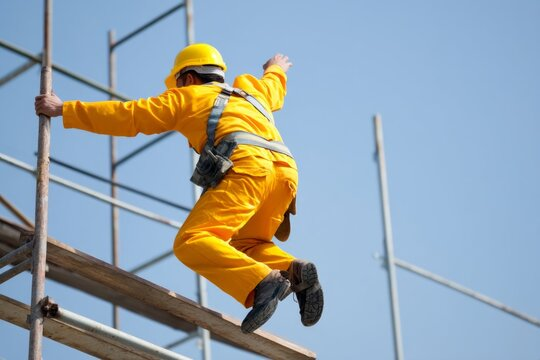
Commercial site accidents almost always have a cause. Often, they result from negligence of safety measures. In our experience, a scaffolding and/or ladder accident case usually reveals one or more of the following critical failures:
- Improper Scaffolding Erection: Scaffolds built on uneven terrain, lacking proper base plates, or missing crucial cross-bracing.
- Missing Guardrails and Toe-boards: OSHA strictly requires guardrails on open sides of scaffolds. Toe-boards are also required to prevent tools and materials from falling onto workers below.
- Overloaded Scaffolding: Placing too many workers, heavy tools, or stacks of building materials on a scaffold platform not rated for that weight capacity.
- Unsecured Ladders: Extension ladders that are not tied off at the top, or step ladders placed on slippery or debris-filled surfaces.
- Lack of Fall Protection Gear: Failing to provide, inspect, or enforce the use of safety harnesses, lanyards, and secure anchor points for workers operating at elevated heights.
- Weather Hazards: Forcing crews to work on exterior scaffolding during Corpus Christi’s high wind advisories or heavy rain, making metal surfaces incredibly slick and dangerous.
The Devastating Impact of Construction Fall Injuries
The human body is not designed to withstand a fall from a commercial roof, a multi-story scaffold, or even a 10-foot ladder onto a concrete slab. The injuries sustained in these accidents are frequently catastrophic, requiring immediate emergency surgery and lifelong medical care.
Victims of commercial site falls regularly suffer from:
- Traumatic Brain Injuries (TBI): Even if a worker is wearing a hard hat, the impact of a high fall can cause severe concussions, brain bleeding, or permanent cognitive impairment.
- Spinal Cord Injuries: Fractured vertebrae or severed spinal cords can result in partial or total paralysis (paraplegia or quadriplegia), forever altering the victim’s independence.
- Compound Fractures: Shattered bones in the legs, arms, and pelvis often require multiple reconstructive surgeries and the insertion of pins, plates, or screws.
- Internal Organ Damage: The blunt force trauma of hitting the ground or structural beams can rupture the spleen, liver, or kidneys, leading to life-threatening internal bleeding.
The financial toll of these injuries is equally devastating. Victims often face hundreds of thousands of dollars in medical bills, specialized rehabilitation costs, and the sudden, terrifying reality that they may never be able to return to their trade.
The Role of OSHA Regulations in Your Case
The Occupational Safety and Health Administration (OSHA) has strict and specific rules and regulations regarding scaffolding and fall protection. These rules are not recommendations, but must be followed.
If a commercial contractor breaches these safety laws, it’s a strong indication of negligence in your legal action. There are important OSHA scaffolding requirements such as:
- Scaffolds and their components must be capable of supporting, without failure, their own weight and at least four times the maximum intended load.
- Employers must provide fall protection for each employee on a scaffold more than 10 feet above a lower level.
- A “competent person” must inspect scaffolds and scaffold components for visible defects before each work shift.
Our legal team meticulously reviews the OSHA standards applicable to your specific accident. If OSHA inspectors have been on-site after your fall and cited the general contractor, we can use those citations to establish a not-so-deniable case of general contractor liability.
Steps to Take Immediately After a Commercial Construction Fall
The things you and your loved one do immediately following a fall on a Corpus Christi commercial job site can be the difference between having a successful case and not. Construction sites evolve quickly – evidence can vanish in hours.
To ensure your rights and health, take these important actions:
- Seek Emergency Medical Attention: Your health is the absolute priority. Do not try to “walk off” a fall. Allow paramedics to transport you to the emergency room immediately.
- Report the Accident: Notify the site supervisor and the general contractor immediately. Ensure a formal, written incident report is filed, and request a copy for your records.
- Document the Scene: If you are physically able, or if a coworker can help, take photos of the exact location where you fell. Photograph the scaffolding, the ladder, missing guardrails, and any tools or debris involved.
- Gather Witness Information: Get the names, phone numbers, and employers of every worker who saw the fall or the hazardous conditions leading up to it.
- Do Not Sign Anything: The general contractor’s insurance company or risk management team may approach you quickly with paperwork or a settlement offer. Never sign anything or give a recorded statement without an attorney present.
- Preserve Your Equipment: Keep the boots, hard hat, and harness (if any) you were wearing at the time of the accident. Do not wash or alter them.
Once your immediate medical needs are addressed, your next call must be to a qualified legal advocate who can step in, preserve site evidence, and halt any attempts by the contractors to cover up safety failures.
Frequently Asked Questions (FAQs)
How long do I have to file a third-party liability claim in Texas?
Generally, in Texas, the statute of limitations for personal injury claims, including construction accidents, would be two years from the date of the injury. But never put it off. Investigating a commercial site calls for action before evidence is destroyed and project completion.
Can I sue the general contractor if I was working for a subcontractor?
Yes. You can certainly file a third-party lawsuit against the general contractor if they were not your employer directly, but their negligence in site safety, supervision, or hazard removal caused your fall.
What kind of compensation can I recover in a scaffolding accident lawsuit?
Depending on the specifics of your case, you can pursue damages for all past and future medical expenses, lost wages, loss of future earning capacity, physical pain and suffering, mental anguish, and physical impairment or disfigurement.
What if the general contractor claims I was partially at fault for the fall?
Texas follows a “modified comparative fault” rule. As long as 50% or below, you can still be compensated, even if you were partly responsible (you may have missed a step). The contractor’s insurance company will constantly attempt to shift responsibility for the issue to the worker as a method of lowering their expenses, and a robust legal team is important to stop the insurance company from doing so.
How much does it cost to hire a construction injury attorney?
It costs you nothing out of pocket. Our attorneys work on a contingency fee basis. This includes all costs of investigation, expert witnesses, and litigation. We do not charge you any attorney’s fees unless we can recover any monetary damages for you.
Schedule Your Free Case Evaluation Today
You do not have to fight this legal battle alone while trying to recover from a severe commercial construction fall. At Jones & Koch Law Firm, we take all personal injury cases on a contingency fee basis. That means you pay us nothing upfront, and we only collect a fee if we successfully win your claim.
Take the first step toward securing your future and holding negligent construction corporations accountable. We invite you to schedule a free case consultation with our team. We will listen to your story, review the accident details, and provide you with clear, actionable legal advice.