
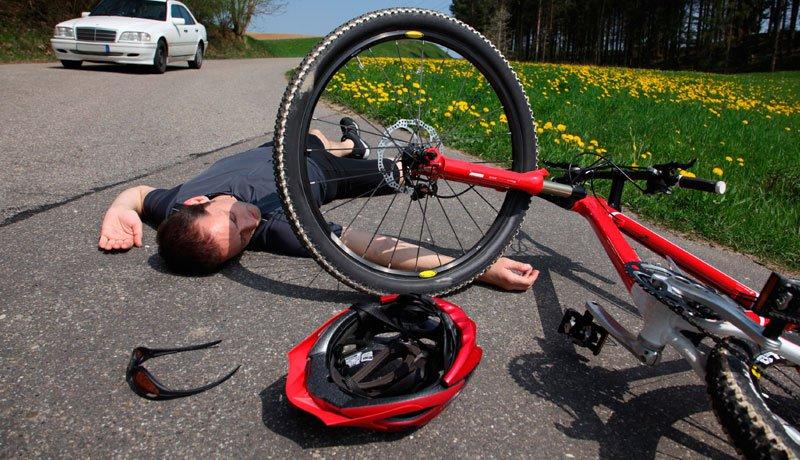
Every weekday morning, more Corpus Christi residents are trading car keys for a bike helmet. Commuting by bicycle to an office near Chaparral Street, a shift on the Bayfront, or a bus connection downtown is good for your health, your wallet, and your commute time. But it also comes with a risk most drivers never have to think about.
Downtown Corpus Christi wasn’t really designed with bike commuters in mind. One of its bike lanes is merely a painted white line beside quick-moving vehicles. With years of Harbor Bridge Project construction, the high numbers of tourists riding along the seawall, and coastal wind gusts high enough to knock a rider off their bike, it should come as no surprise that cyclist crash numbers have continued to rise here and across the nation.
This guide breaks down the specific hazards facing adult bike commuters downtown, what Texas and local law say about your rights, and what to do if you’re hurt. And if you’re already searching for a Corpus Christi bicycle accident lawyer, you’ll find out why local riders trust our team a little further down.
Why Downtown Corpus Christi Is Especially Risky for Bike Commuters
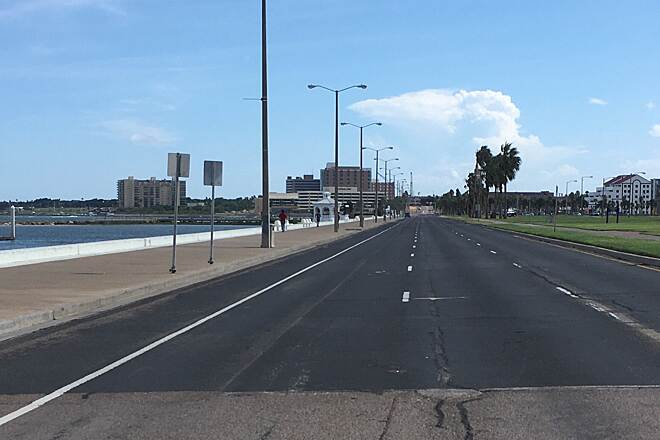
Corpus Christi is a lovely city to ride in, as long as you don’t have to take part in three feet of pavement with a busload of 40 mph rush-hour traffic. The downtown core is particularly challenging for commuting cyclists for several reasons:
- “Bike lane” often just means paint. This means on some portions of Shoreline Boulevard and the downtown grid, there is no curb, bollard, or physical barrier between the bicyclist and the cars on the road.
- Ongoing Harbor Bridge Project detours. Over the years, roadway development along I-37, N. Chaparral Street and the downtown interchange has forced extra traffic to be routed onto streets not originally designed for it, and in some cases, it is crossing through commuter cycling corridors.
- Heavy pedestrian and tourist traffic. Shoreline/Bay Trail becomes a tourist, family, and dog walking route, with commuting bicyclists forced to routinely share space with pedestrians on one side and cars on the other.
- Strong, unpredictable coastal winds. When the “lane” is just a few feet wide to start with, a rider is suddenly pushed several feet off the course, sideways, in an instant by a gust off the bay.
- Infrastructure still catching up. The city’s most recent comprehensive bike plan dates back to 2016, and while an update has been underway in the years since, national bike-friendliness studies have consistently ranked Corpus Christi near the bottom nationally.
Local crash data backs up what commuters already feel on the road. The numbers of bicycle-involved accidents that regularly appear in the City’s crash record do not come close to the numbers of serious injuries that are sustained or deaths that are reported; and, in recent years, the number of bicyclist fatalities has reached record numbers across the nation.
The team at Jones & Koch Law Firm rides and drives these same downtown streets every day. We understand what intersections and construction areas are prone to accidents, what places are considered “bike lanes,” and how this local information can help us create a case on behalf of injured commuters.
Who’s Liable? Texas Bicycle Law and Insurance Company Tactics
Under the Texas Transportation Code, a bicycle is legally treated the same as any other vehicle on the road. That means cyclists have the same right to use travel lanes, and drivers owe them the same duty of care they’d owe another motorist.
Corpus Christi backs this up with a local ordinance protecting “vulnerable road users,” a category that includes cyclists. Under this city code, motorists are required to provide:
- At least 3 feet of clearance when passing a cyclist in a car
- At least 6 feet of clearance when passing in a truck or commercial vehicle
- Cyclists are required to use an available, unobstructed bike lane when one exists
Texas law also prohibits opening a car door into the path of an oncoming cyclist, a hazard known as “dooring” that’s especially common on downtown streets lined with parked cars.
Even with such protections, insurance adjusters will often attempt to pass the buck onto the injured cyclist, instead of the policyholder. Even if the driver was solely responsible for the accident, it is common to hear allegations from others that the rider “swerved unexpectedly,” “was not visible enough,” or “was not in a designated lane.”
Texas also has a modified comparative negligence statute. If you have any responsibility for a collision, you are not entitled to the full amount of compensation, and if you are 51% or more responsible, you cannot receive any compensation. That’s where the insurance companies really need to lay blame fast and hard on the cyclist, and that’s why solid evidence of what’s happening is important.
The Real Injuries Behind “Minor” Bicycle Accidents
A driver involved in a collision has a steel frame, airbags, and a seatbelt working to protect them. A bike commuter has very little in between their body and the pavement, or an oncoming vehicle. This is why it’s important that even a low-speed collision can have long-term consequences.
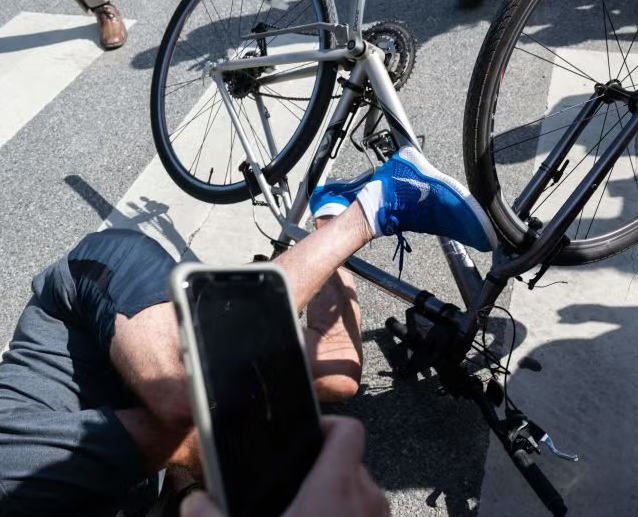
Injuries commonly seen in downtown commuter bicycle accidents include:
- Traumatic brain injuries (TBI), which can occur even in riders wearing a helmet
- Fractures to the wrist, collarbone, hip, or pelvis from bracing during a fall
- Road rash and deep lacerations from sliding across pavement
- Spinal cord injuries, which can lead to long-term or permanent disability
- Soft tissue and ligament damage that sometimes doesn’t show symptoms for days
Nationally, federal crash data shows more than a quarter of fatal bicycle crashes happen at intersections, and the large majority occur in urban areas exactly like downtown Corpus Christi. A reminder that many people do not realize that just getting to work at an intersection every morning is a dangerous situation.
The worst injuries are often the ones that are not readily apparent. A concussion or spinal injury doesn’t result in a broken bumper or a cracked windshield—so insurance companies are sometimes tempted to cheaply undervalue bicycle accident claims early on. The true cost of a crash often includes months of physical therapy, missed income, and future medical care that a fast first offer rarely accounts for.
What to Do Immediately After a Bicycle Accident in Corpus Christi
What happens in the hours and days after a crash can significantly affect both your health and your legal claim. When you’re able to, try to:
- Get to safety and call 911. If things seem OK, but do have yourself checked by paramedics. Some injuries are not immediately apparent or recognizable, such as a blow to the head or internal bleeding, and a police crash report will be crucial later.
- Document the scene. Take photos of the car, bike, roadways, skid marks, and injuries prior to any vehicles being moved or fixed.
- Preserve your bicycle. Don’t repair or discard it. Physical evidence of impact point and force is a damaged bike.
- Collect witness contact information. If the driver’s account changes, a name and phone number of a witness who witnessed the accident can prove to be very important.
- Save any digital evidence. Details that you didn’t notice in the moment can be captured by GoPro video, Strava or GPS ride data, and nearby Ring or business security cameras.
- Avoid recorded statements to any insurance company, including your own, until you’ve spoken with an attorney. These statements are often used later to minimize a claim.
- Contact a Corpus Christi bicycle accident lawyer early. The sooner evidence is secured, the stronger your case tends to be.
Why Corpus Christi Commuters Choose Jones & Koch Law Firm
Not every personal injury firm treats bicycle accidents with the seriousness they deserve. At Jones & Koch Law Firm, we start from a simple belief: on a bike, there’s no such thing as a “minor” accident.
Here’s what sets our approach apart for injured commuters:
- Board-certified trial experience. Attorney Joe Jones is Board Certified in Personal Injury Trial Law by the Texas Board of Legal Specialization, a distinction held by fewer than 3% of Texas attorneys, and brings the discipline of his background as a Marine Corps Judge Advocate to every case investigation.
- A Litigation-Ready Demand from day one. We build your case as though it’s headed to trial from the start, so insurance companies know we’re prepared to go the distance if they won’t offer a fair settlement.
- Fast, thorough evidence preservation. We move quickly to secure GoPro footage, Strava data, and nearby Ring or business security camera footage before it’s lost.
- The 2-for-1 Litigation Advantage. If your case requires full litigation, we bring in vetted trial partners at no additional cost to you, giving you two legal teams working toward one goal: the best possible result for you.
- Direct access to your attorneys. You’ll speak directly with Joe Jones or Sean Koch, not a rotating cast of case managers.
- No upfront cost, ever. We handle every bicycle accident case on a contingency fee basis, so you owe us nothing unless we win your case.
Frequently Asked Questions (FAQs)
Do I need a lawyer if the driver’s insurance already offered me a settlement?
Early settlement offers are often far lower than what a claim is actually worth, especially before the full extent of your injuries is clear. Discussing the matter with a bike accident attorney before settling anything is a great way to prevent you from waiving your right to a full settlement.
How much does it cost to hire a bicycle accident lawyer in Corpus Christi?
At Jones & Koch Law Firm, we handle every bicycle accident case on a contingency fee basis. No upfront charge to you, and we only charge a fee if we are successful in recovering any compensation on your behalf.
How long do I have to file a bicycle accident claim in Texas?
Under the general rule of Texas law, injury victims have two years from the accident to file a personal injury lawsuit. Missing this deadline can permanently bar your claim, so it’s important to speak with an attorney as soon as possible.
What if I was partially at fault for the accident?
Under Texas law, there is a modified comparative negligence rule, which allows you to still recover damages if you have some degree of fault, but less than 51%. You will recover based on the percentage of fault, which means that your recovery will be lowered by that percentage.
Do I have to wear a helmet while biking in Corpus Christi?
Texas has no statewide law for helmets for adult bicyclists and Corpus Christi has no helmet law. However, a helmet is always advisable and an insurer cannot refuse a valid claim due to the lack of a helmet.
What if the driver who hit me fled the scene?
Hit-and-run bicycle accidents are unfortunately common. You may still have a right to recover compensation from your own underinsured/unsigned motorist coverage and our team has the expertise necessary to review nearby camera footage and other evidence to help identify the driver.
Will my case have to go to trial?
The majority of bicycle accident lawsuits are resolved out of court. At Jones & Koch, we prepare every case as if it’s going to trial from day one, which often motivates insurance companies to offer a fair settlement rather than risk a courtroom loss.
Schedule Your Free Case Evaluation Today
You don’t need to battle this legal battle yourself during a serious bicycle accident. At Jones & Koch Law Firm, we take all personal injury cases on a contingency fee basis. That is, you do not pay anything up front, and we only charge if we are successful in your claim.
Start your future and know the negligent drivers will be held accountable. We would love to hear your case and answer any questions you may have. We will listen to your story, read through the accident facts, and offer you legal guidance that is clear and actionable.
The longer the day goes by, the more difficult it can be to maintain evidence, and the easier it will be for an insurance company to blame you. If you are injured when riding your bicycle in the heart of Corpus Christi, a team of experienced Corpus Christi lawyers is on your side.