

Sharing the highway with an 80,000-pound commercial 18-wheeler is a daily reality for drivers in Corpus Christi and throughout Texas. While most commercial truck drivers are dedicated professionals who prioritize safety, the immense pressure of the logistics industry often pushes individuals past their physical limits. When trucking companies prioritize profit over safety, drivers are forced or incentivized to meet impossible delivery deadlines, leading directly to catastrophic fatigue.
A drowsy truck driver is just as dangerous—if not more so—than a drunk driver. When a fatigued operator falls asleep at the wheel, their delayed reaction times and inability to brake can result in devastating, life-altering collisions. However, proving that a driver was asleep or exhausted at the moment of impact used to be incredibly difficult. In the past, trucking companies relied on easily falsified paper logbooks, jokingly referred to in the industry as “comic books.”
Today, the landscape of commercial vehicle litigation has changed dramatically thanks to technology. If you or a loved one has been injured in a collision with a semi-truck, securing a skilled truck driver fatigue accident lawyer is the most critical step you can take. Modern commercial trucks are equipped with advanced tracking systems and black boxes that record every movement the vehicle makes. Understanding how this technology works, and how a legal team can secure it before it is destroyed, is the key to proving negligence, holding massive trucking corporations accountable, and securing the maximum compensation you deserve.
The Evolution of Trucking Safety: What Are ELDs?
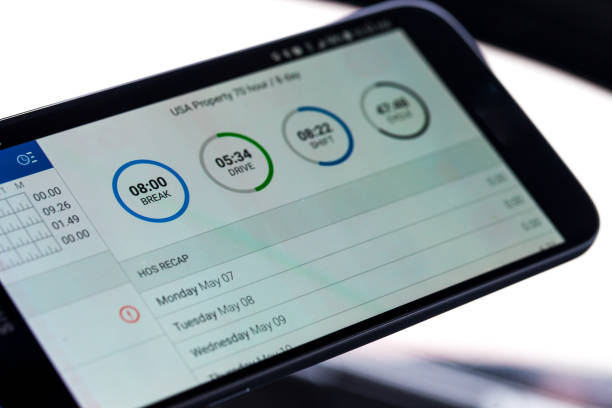
To combat the epidemic of drowsy driving accidents on American highways, the Federal Motor Carrier Safety Administration (FMCSA) implemented the Electronic Logging Device (ELD) mandate, which went into full effect in December 2017.
An ELD is a piece of hardware that synchronizes directly with a commercial truck’s engine to automatically record driving time, engine hours, vehicle movement, and miles driven. Unlike the old paper logbooks that could easily be altered with a pen and eraser, ELDs create a digital, tamper-resistant record of a driver’s activity.
Here is what an ELD tracks on a minute-by-minute basis:
- Engine Power Status: Exactly when the truck was turned on and off.
- Vehicle Motion: When the truck is moving and when it is idling.
- Miles Driven: Precise distances covered during specific timeframes.
- Engine Hours: The total duration the engine has been running.
- Driver Identification: Who is logged into the system and operating the vehicle.
While ELDs are designed to prevent fatigue-related crashes, trucking companies and their insurance providers will still fight aggressively to deny liability after a wreck. They have teams of defense attorneys ready to protect their bottom line. This is why injury victims turn to Jones & Koch Law Firm. As the premier personal injury firm in Corpus Christi, we understand precisely how to interpret complex ELD data, expose discrepancies, and use the trucking company’s own technology against them to build an impenetrable case for our clients.
The Foundation of Negligence: FMCSA Hours-of-Service Rules
To understand how an ELD proves fatigue, you must first understand the rules it is designed to enforce. The FMCSA has established strict Hours-of-Service (HOS) regulations that dictate exactly how long a commercial driver can operate a vehicle before taking mandatory rest breaks.
When a trucking company or driver ignores these rules, they are putting the public at extreme risk. Common hours-of-service violations include:
- The 11-Hour Driving Limit: A commercial driver may drive a maximum of 11 hours after having 10 consecutive hours off duty. ELDs track this to the minute.
- The 14-Hour Shift Limit: A driver may not drive beyond the 14th consecutive hour after coming on duty (which includes non-driving work like loading or inspecting the truck). Once 14 hours have passed, they must take 10 consecutive hours off.
- The 30-Minute Break Rule: Drivers must take a 30-minute break from driving after 8 cumulative hours of driving without at least a 30-minute interruption.
- The 60/70-Hour Limit: A driver may not drive after spending 60 hours on duty in 7 consecutive days, or 70 hours on duty in 8 consecutive days.
When an accident occurs, the ELD data provides a clear, unalterable timeline of the driver’s shift. If the logs show that the driver was on their 13th hour of driving, or had skipped their mandatory rest break to make a delivery on time, that data becomes undeniable proof of regulatory violations and negligence.
Securing the Data: How a Commercial Truck Accident Attorney Subpoenas Evidence
One of the most crucial elements of a truck accident claim is the preservation of evidence. Trucking companies are only required by federal law to keep ELD records for six months. Furthermore, they are only required to preserve the truck’s physical black box data—known as the Electronic Control Module (ECM)—for a short period. If you wait too long to seek legal representation, the trucking company can legally delete the data, destroy the logs, or put the wrecked truck back into service, effectively wiping away the evidence of their negligence.
A highly experienced commercial truck accident attorney knows exactly how to stop this from happening. The immediate steps taken include:
- Issuing a Spoliation Letter: Your lawyer will immediately send a legally binding formal demand—known as a spoliation of evidence letter—to the trucking company. This letter places a strict legal hold on the truck, the ELD data, the ECM data, maintenance logs, and driver qualification files, forbidding the company from altering or destroying them.
- Extracting the ECM Data: While the ELD tracks the driver’s hours, the ECM (the black box) acts as the truck’s brain. After a crash, a specialized accident reconstructionist hired by your legal team will download the ECM data. This reveals critical crash-time metrics such as the truck’s speed at the moment of impact, whether the brakes were applied, steering angles, and cruise control status.
- Cross-Referencing Evidence: If a driver fell asleep, the ECM will often show that cruise control was engaged, speed was constant, and no braking occurred before the collision. When this black box data is paired with an ELD showing the driver was beyond their 11-hour limit, the case for driver fatigue becomes virtually impossible for the defense to refute.
Connecting the Dots: Analyzing ELD Evidence in Truck Crash Investigations
Even with the ELD mandate in place, unscrupulous trucking companies and drivers still find ways to cheat the system. Uncovering these deceptive practices requires a deep, forensic analysis of the logs.
Acquiring ELD evidence truck crash data is only the first step; interpreting it is where legal expertise truly matters. Skilled investigators look for specific red flags that indicate a driver was fatigued or that logs were manipulated:
- Unassigned Driving Time: Sometimes, a driver will log out of the ELD system but continue driving, creating “unassigned” miles on the truck’s computer. A lawyer will match the truck’s GPS data with the driver’s location to prove they were operating the vehicle off the books.
- The “Ghost Driver” Tactic: In team driving operations, one driver might log into the ELD while the other (who is out of hours) continues to drive.
- Comparing Supporting Documents: ELD data does not exist in a vacuum. A meticulous attorney will subpoena toll booth receipts, fuel station timestamps, bills of lading, and weigh station records. If a driver’s ELD shows them “off duty” and sleeping at 2:00 PM, but a fuel receipt shows they were purchasing diesel 300 miles away at 2:15 PM, the fraud is instantly exposed.
- Company Coercion: Often, the liability extends beyond the driver. Subpoenaed dispatch communications, emails, and text messages between the driver and the trucking company can reveal that dispatchers were forcing the driver to ignore their ELD warnings to deliver cargo faster. This can open the door for punitive damages against the corporation.
Why Corpus Christi Residents Trust Jones & Koch Law Firm
The aftermath of a commercial truck wreck is chaotic and overwhelming. Victims are often dealing with catastrophic injuries such as traumatic brain injuries, spinal cord damage, severe burns, or the wrongful death of a family member. While you are in the hospital recovering, the trucking company’s rapid response team is already at the crash scene, looking for ways to limit their financial exposure and shift the blame onto you.
You need a local, aggressive advocate who knows how to fight back. In Corpus Christi and the surrounding South Texas region, Jones & Koch Law Firm is the premier choice for commercial trucking litigation.
Our deep understanding of FMCSA regulations, combined with our network of top-tier accident reconstructionists and medical experts, allows us to build airtight cases. We do not let trucking companies bully our clients or hide behind corporate red tape. By moving swiftly to secure ELD data, dashcam footage, and black box metrics, we build a narrative of truth that forces insurance companies to the negotiating table—and we are never afraid to take them to court if they refuse to offer a fair settlement.
When you hire Jones & Koch, you are leveling the playing field against billion-dollar logistics companies.
Frequently Asked Questions (FAQs)
What is the difference between an ELD and an ECM (Black Box)?
An ELD (Electronic Logging Device) specifically tracks a driver’s hours of service, on-duty time, and rest breaks to ensure compliance with federal fatigue laws. An ECM (Electronic Control Module) is the engine’s computer, which records mechanical data such as vehicle speed, hard braking events, and engine RPMs in the seconds leading up to a crash. Both are vital pieces of evidence.
Can ELD data be altered or deleted by the truck driver?
While ELDs are designed to be tamper-resistant, drivers and dispatchers sometimes attempt to edit logs to classify driving time as “yard moves” or “personal conveyance” to hide hours-of-service violations. A skilled attorney will audit the logs to uncover these illegal edits.
How long do I have to file a lawsuit after a truck accident in Texas?
In Texas, the statute of limitations for personal injury claims is generally two years from the date of the accident. However, evidence like ELD data and dashcam footage can be legally destroyed by the trucking company in as little as six months. It is critical to contact a lawyer immediately so a preservation letter can be sent.
How do you prove a truck driver fell asleep if they deny it?
Even if a driver denies falling asleep, the data tells the truth. If the ELD shows they were driving past their legal limit, and the ECM shows no brakes were applied before a rear-end collision, the physical evidence overwhelmingly points to fatigue or sleep.
Will I have to go to court for a truck accident claim?
Not always. When a law firm builds a highly robust case backed by undeniable ELD and black box evidence, trucking companies often prefer to settle out of court to avoid a public trial and a potentially massive jury verdict. However, your attorney should always be prepared to take the case to trial if necessary.
Schedule Your Free Case Evaluation Today
You do not have to fight this legal battle alone while trying to recover from a severe commercial truck collision. At Jones & Koch Law Firm, we take all personal injury cases on a contingency fee basis. That means you pay us nothing upfront, and we only collect a fee if we successfully win your claim.
Take the first step toward securing your future and holding negligent trucking corporations accountable. We invite you to schedule a free case consultation with our team. We will listen to your story, review the accident details, and provide you with clear, actionable legal advice.